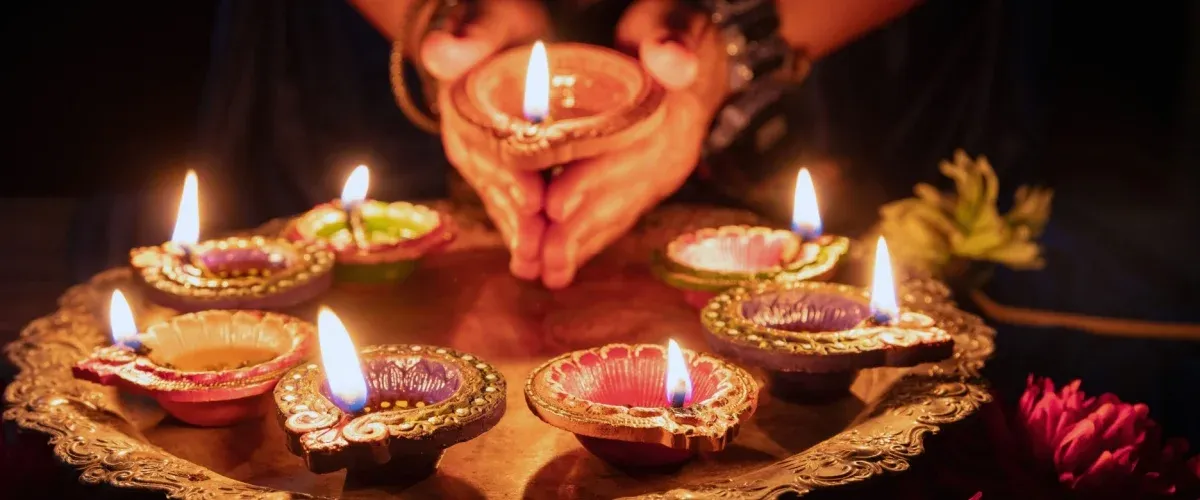
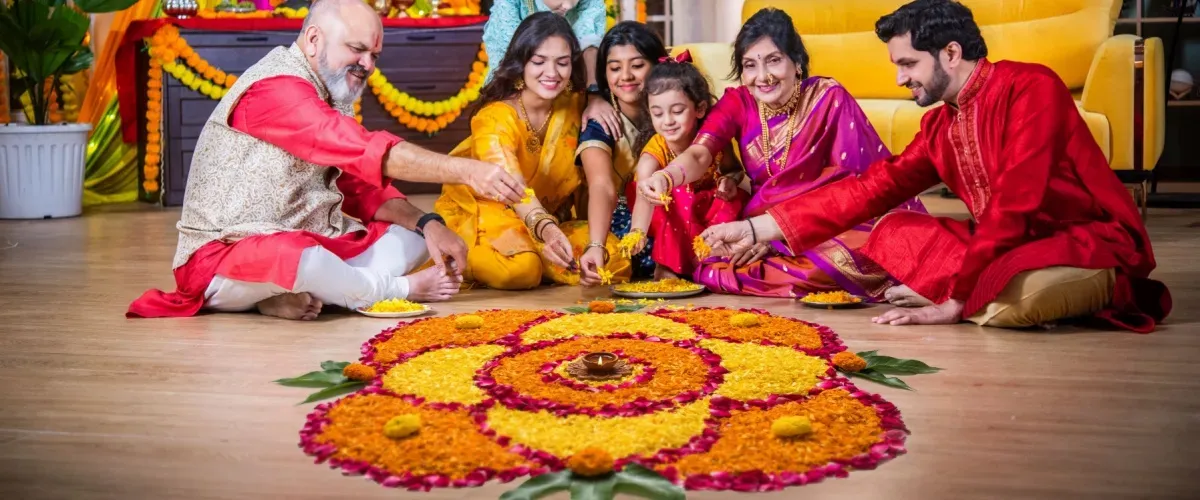
As Diwali is approaching this year, you will be busy decorating the home. Though Diwali is often termed as ‘the festival of lights’, it is not just lighting diyas (lamps) that brighten up or decorate your home. Rangolis too play a crucial role in making your home look vibrant. The intricate, colorful patterns that adorn the entrances of homes make them look dazzling. More than just a decoration, rangoli is an art form. It's a vibrant expression of joy, a symbol of good luck and a warm welcome to guests and the goddess of wealth, Lakshmi. The tradition of creating a rangoli design for Diwali is a cherished part of the festival of lights, bringing families together in a creative and spiritual celebration.
This guide will walk you through everything you need to know, from simple patterns for beginners to stunning, complex designs that will leave everyone in awe. Get ready to unlock your creativity and make this Diwali truly special!
What is a Rangoli and How is it Significant?
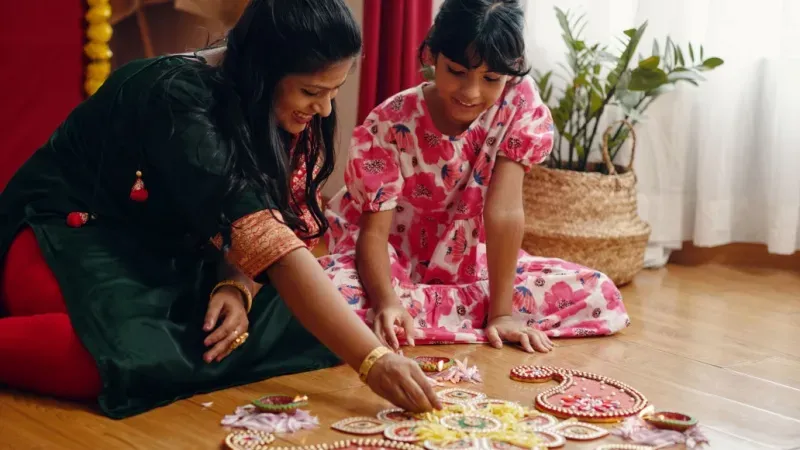
Rangoli has been a part of Indian mythology and there are multiple stories related to its origin. As per one story, Lopamudra, the wife of Sage Agastya, created a colorful design with rice, lentils, flowers and spices that appeared like a havan kund or a sacred worship place where Hindus worship Gods by offering ghee, oil, and rice on fire. Lopamudra’s intention was to help her husband, Sage Agastya and she appealed to the five elements sky, earth, wind, water and fire to give her colors to make the design look beautiful. Following this, females started preparing such colorful designs to please the Gods. During Diwali, women prepare rangoli to welcome Goddess Lakshmi, the goddess of prosperity. The preparations for Diwali are considered incomplete without rangolis.
Also Read: Diwali 2025: Dates, Timings, Significance & How to Celebrate
Different Rangoli Designs for 2025
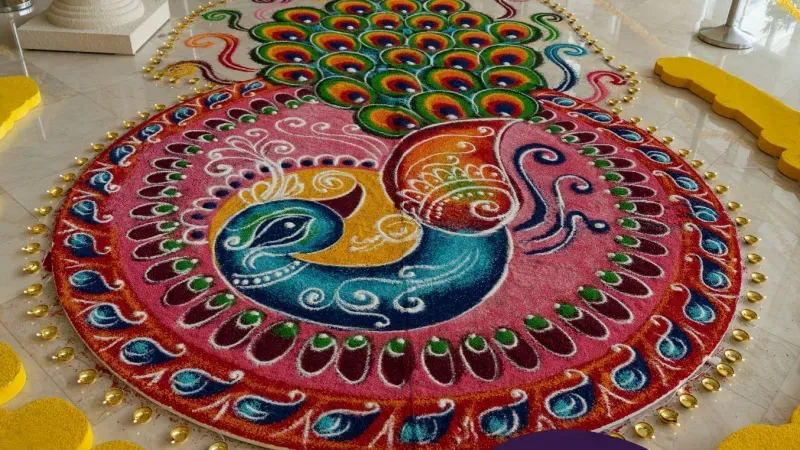
One of the attractions of making rangolis is the design. You may prepare rangolis in multiple shapes and designs that make them catchy and beautiful. The rangoli designs that are high in demand are those which are both religiously significant and beautiful. Rangoli is a versatile art form with endless design possibilities. Whether you are a novice or an experienced artist, there is a design for everyone. Here are some of the most popular and symbolic designs to consider for your Diwali celebration.
Peacock Rangoli Design
The peacock is a symbol of grace, beauty and divinity in Indian culture, making it a highly favored motif for Diwali rangoli. The Peacock also holds a crucial religious significance in Hindu scriptures. A peacock rangoli is characterized by its vibrant blue and green colors and the magnificent spread of its feathers. Creating the bird’s elegant neck and the intricate details of its plumage can be a delightful challenge. You may use colored powders, flower petals, or even shimmering sequins to bring the design to life. Beginners may use a stencil to simplify the process, while more experienced artists can draw it freehand to showcase their skills. Placing a few diyas around a peacock design enhances its beauty, making it a stunning centerpiece for your festive decor.
Lotus Rangoli Design
The lotus holds a special place in Hindu mythology. The flower symbolizes purity, enlightenment and wealth, as it is the seat of Goddess Lakshmi. A lotus rangoli is both elegant and deeply symbolic and is the perfect design choice for Diwali. The design typically involves creating the delicate petals of the flower, often in shades of pink, white, and red, arranged in a symmetrical pattern. The center of the lotus can be adorned with a diya or the auspicious 'Om' symbol. Flower petals are an excellent material to make a soft and natural-looking lotus design. Its simple yet profound beauty makes it a popular choice for home entrances and puja rooms, inviting prosperity and positive energy into the home.
Ganesha Rangoli Design
Lord Ganesha, as per Hindu beliefs, is the remover of obstacles and the god of new beginnings. Lord Ganesha is worshipped during Diwali and holds a special place in rangolis. Ganesha Rangoli will bring good fortune and remove any hurdles from one's life. These designs often depict the elephant god’s distinct form, complete with his trunk, large ears, and a modak (sweet dumpling) in hand. Bright colors like orange, yellow, and red are commonly used to portray him. While a detailed Ganesha rangoli can be complex, many simple stencils and dot-grid patterns are available for beginners. This design is particularly popular for the main entrance of the house to welcome guests and divine blessings.
Geometric and Symmetric Designs
Geometric rangoli designs are a fantastic option for those who appreciate precision and order. These patterns are created using a combination of lines, circles, squares, triangles, and other shapes to form a complex and mesmerizing whole. The beauty of a geometric rangoli lies in its symmetry and balance. While you make rangoli, start with a central point and build the design outwards, creating layers of patterns. This type of rangoli is often made using the dot-grid method, where dots are placed in a grid to guide the drawing of lines and curves. The result is a visually stunning and harmonious design that symbolizes cosmic order and stability.
Sanskar Bharti Rangoli
Originating from Maharashtra, the Sanskar Bharti rangoli is a unique and elaborate style known for its large, intricate patterns. These rangolis can cover a vast area. These designs are typically created by a group of people. The signature feature of this style is the use of three or five fingers to draw thick, uniform lines, creating an effect that looks printed. The designs are composed of circles, with intricate fillings of leaves, petals, and other traditional motifs. While it looks complex, the basic technique is easy to learn. These rangolis are suitable for community celebrations or large spaces, creating a grand and spectacular welcome.
Suggested Read: Best Places to Visit in October in India
What are the Essential Materials to Create a Rangoli?
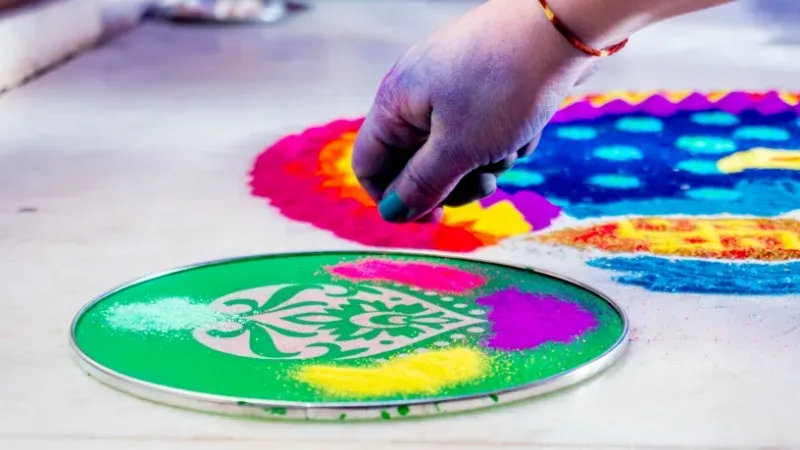
It is good to have an idea about the essentials that you need to create a rangoli. This will help you keep the required items on the side, ready before you start drawing. Traditionally, natural ingredients were used, but today, a wide array of options are available to make your designs pop.
Let’s take a look at the most essential things that you will require to draw a rangoli.
Colored Powders (Rangoli Colors)
The most common material for rangoli is finely ground colored powder, often made from limestone or sandstone. You may find them in a spectrum of brilliant colors, from primary shades to fluorescent neons. They are available in local markets, especially during the festival season. For a smooth and even application, it is best to sift the powders to remove any lumps. You can hold the powder between your thumb and index finger and release it slowly to create lines and shapes. Squeeze bottles or paper cones can also be used for better control and precision, making them ideal for creating intricate details in your rangoli design for Diwali.
Flower Petals
For an eco-friendly and fragrant rangoli, nothing beats fresh flower petals. This type of rangoli, also known as 'Pookalam,' is popular in South India. Marigolds (yellow and orange), roses (red and pink), jasmine (white), and chrysanthemums (various colors) are excellent choices of flowers for this rangoli. You can use whole flowers or just the petals to fill in your design. Flower petal rangolis offer a beautiful, natural texture and a lovely aroma that adds to the festive atmosphere. They are perfect for creating soft, blended designs and are gentle on the environment. To keep a flower rangoli fresh, you can sprinkle a little water on the flower rangoli to keep it fresh for a long time.
Colored Rice and Semolina
Colored rice or semolina (rava or sooji) is another fantastic, readily available material for rangoli. You can easily make your own by mixing raw rice with a few drops of food coloring and letting it dry completely. This provides a granular texture that is different from fine powders, adding a unique dimension to your design. It is particularly good for filling in larger sections of a pattern. The grains are easy to handle, making them a great option for children who want to participate in the tradition. Using different colored grains, you can create beautiful mosaic-like effects that are both traditional and creative.
Pulses and Grains
While synthetic colors are now the most preferred choice for rangolis, earlier, they were made using natural pulses and grains from the kitchen. Different lentils like moong dal (green), masoor dal (red) and urad dal (white/black) were used to create earthy and rustic designs. This method connects the art form to its agricultural roots and symbolizes abundance and prosperity. The varied textures and natural colors of different grains lend a unique and traditional charm to the rangoli. It’s also completely biodegradable and safe for birds to eat afterward.
Suggested Read: Best Places to Visit in Winter in India
What Major Tools and Techniques Should a Beginner Know About Rangoli Drawing?
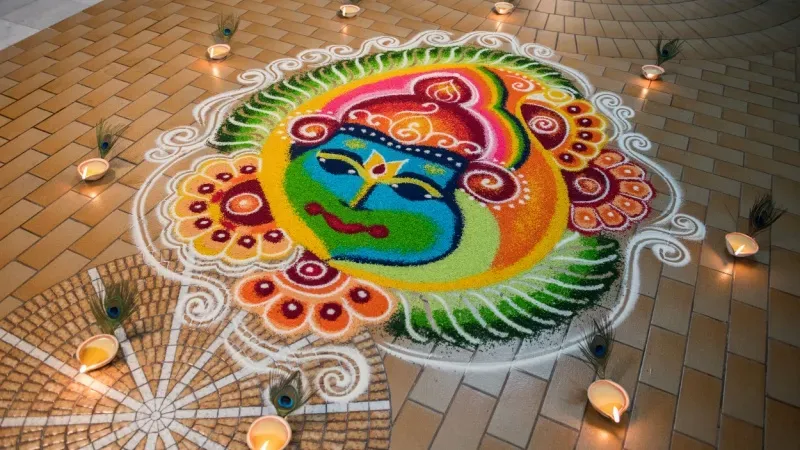
Feeling intimidated by complex designs? Don't be! With the right tools and techniques, anyone can create a beautiful rangoli. Here are some simple methods to get you started.
Using Stencils
Stencils are a beginner’s best friend when it comes to rangoli. Stencils are widely available in various designs, from simple floral patterns to elaborate peacocks. Using stencils is the best and easiest way to create a rangoli. All you have to do is place the stencil on a clean, dry surface and sprinkle the colored powder or flower petals over it. You may lift the stencil to find a beautiful design. It’s a foolproof way to get a neat and professional-looking rangoli with minimal effort. You can use a single stencil or combine multiple ones to create a larger, more complex pattern.
The Dot Grid Method (Chukki Rangoli)
The dot grid method is a traditional technique to create perfectly symmetrical designs. It involves making a grid of dots with chalk or white rangoli powder. These dots then serve as a guide to draw the lines and curves of the pattern. This technique helps you to create geometric rangolis or traditional kolam patterns from South India. Start with a simple 3x3 or 5x5 dot grid and practice drawing basic shapes before moving on to more complex designs. It helps in maintaining proportion and symmetry.
Freehand Drawing
Once you get trained in rangoli making and feel more confident, try your hand at freehand drawing. This technique gives you the ultimate creative freedom. The key is to have a steady hand. Traditionally, artists hold the powder between their thumb and forefinger, letting it flow in a controlled manner to create lines. You can practice on a newspaper first to get a feel for controlling the flow of the powder. Start with simple designs like diyas, flowers, or basic geometric shapes, and gradually move on to more intricate patterns as your skill improves.
Suggested Read: Things to Do in India for a Memorable Experience
Tips for a Flawless Diwali Rangoli
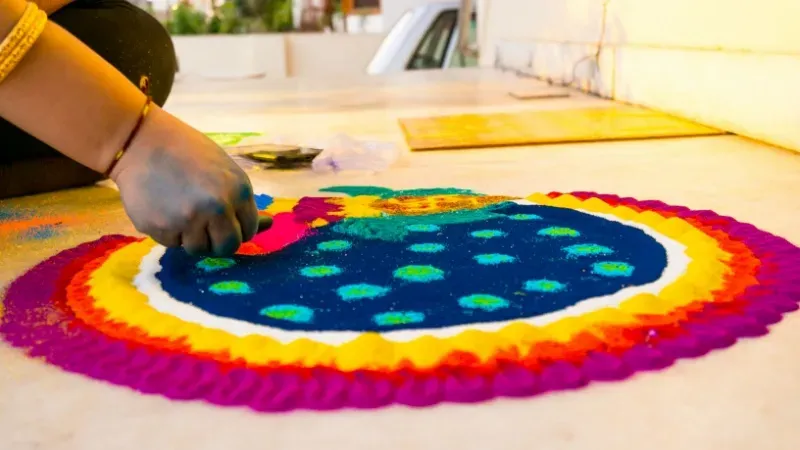
The beauty of the rangoli is highly based on the location and the material used. You need to pick a decent spot at home and utilize methods that make the rangoli appear fabulous. Let us see some of the ways that will make your rangoli stand out.
Choose the Right Spot: Traditionally, rangolis are created at the entrance of the home, as it signifies a warm welcome. You can also make one in your puja room or in a corner of your living room. Ensure the surface is flat, clean, and dry before you begin.
Prep the Surface: For a rangoli made with powder, a slightly coarse surface is ideal. If your floor is too smooth, you can create a base by applying a thin layer of chalk powder or white paint mixed with water and letting it dry. This helps the colors pop and stay in place.
Plan Your Colors: A good combination of colors can make a simple design look spectacular. Use contrasting colors to make your design stand out. For example, a white outline can make the inner colors look more vibrant. Don't be scared to experiment with shades and gradients.
Add Embellishments: Elevate your rangoli by adding diyas (earthen lamps), candles, or fairy lights around and within your design. The play of light and color creates a magical effect, especially in the evening. You can also use glitter or sequins for an extra touch of sparkle.
Suggested Read: Top 60 Tourist Destinations in India to Visit
Things to Know Before You Start Your Rangoli
If you are new to rangoli making, minor issues may come up in your initial attempts, and having some idea about how to approach it may make things easier. Knowing this, we’ve got a few points for you.
Design and Skill Level
Before you begin, select a rangoli design that matches your current skill level. If you are a beginner, start with a simple pattern using a stencil or a dot grid. Attempting an overly ambitious design in the first attempt can be frustrating. There are plenty of simple rangoli designs for Diwali ideas online to inspire you.
Sourcing Your Materials
During the Diwali season, rangoli colors and stencils are easily available at local markets and general stores. For eco-friendly options like flower petals or colored rice, you can source them from your local florist or kitchen. You need to opt for good quality, non-toxic colors, especially if you have children or pets at home.
Cultural Etiquette
Rangoli is a sacred art form. It is traditionally placed at the threshold of the home to welcome positive energy. Walking over a rangoli is disrespectful. Once the celebration is over, the rangoli should be swept away respectfully and not mixed with general waste if possible.
Timing and Placement
The timing for making a rangoli is crucial. It is typically made on the morning of the main Diwali day, or sometimes a day before. It is placed at the entrance, in the courtyard, or in the puja room. Placing it near the entrance is most common as it is meant to welcome guests and the goddess of wealth.
Budget-Friendly Rangoli
Being expensive doesn't mean beautiful. You don't need to shell out big to create a rangoli. You can make your own colors using rice flour, turmeric, and vermilion. Flower petals from your garden, colored sawdust, and kitchen grains are all cost-effective materials that can result in a stunning and traditional rangoli.
Suggested Read: Exploring India's Best Kept Hidden Gems
An intricate and well-made rangoli design for Diwali is more than just a decoration. It’s the heart of your festive decor. Our goal was to familiarize you with multiple rangoli designs and help you address the major concerns related to rangoli making. This guide is crafted to help you embrace this beautiful tradition with confidence, whether you are making a rangoli for the first time or looking for new ideas. By understanding the symbolism, materials, and techniques, you can create something truly special that fills your home with color, positivity, and the true spirit of Diwali. For all your festive celebration needs, consider exploring options with travel and holiday planners to make your season even brighter.
Explore 1600+ India tour packages and book the best for your Diwali celebration.
FAQs – Rangoli Design for Diwali
Rangoli on Diwali symbolizes happiness, positivity, and good luck. It is made at the entrance of homes to welcome Goddess Lakshmi, the goddess of wealth and prosperity, and to greet guests during the festival.
Absolutely! Beginners can start with simple geometric patterns, use stencils for a perfect outline, or try the dot grid method. You may check some of the many easy-to-follow tutorials available on the internet that break down simple yet beautiful designs.
For the most vibrant colors, store-bought rangoli powders are excellent. To make the colors pop even more, create your design on a white base made from chalk powder or rice flour. Adding glitter can also enhance the vibrancy. However, it is suggested that you do not use any color material that may harm the body or the environment around.
Traditionally, rangolis are made at the main entrance or threshold of your home. Other popular spots include the puja (prayer) room, the center of a living room, or in a courtyard.
Rangoli on a dry surface will last longer. You may clean up the surface and dry it before starting. Apply a thin coat of oil to the floor, which helps the powder stick. Avoid placing it in a high-traffic or windy area.
Yes, eco-friendly rangoli items are available in plenty. You can create a beautiful and eco-friendly rangoli using flower petals, colored rice, turmeric, coffee powder, and various pulses and grains. These materials are biodegradable and safe for the environment.
Color choice is personal. However, using contrasting colors makes a design stand out. Traditional colors like red, yellow, green, and white are always popular. You can also choose colors that match your home decor for a coordinated look.
Yes, you may use tools to create a decent rangoli. Squeeze bottles, funnels with a small opening, and special rangoli pens can help you draw finer lines. You can even use simple household items like bangles and bottle caps to create perfect circles.